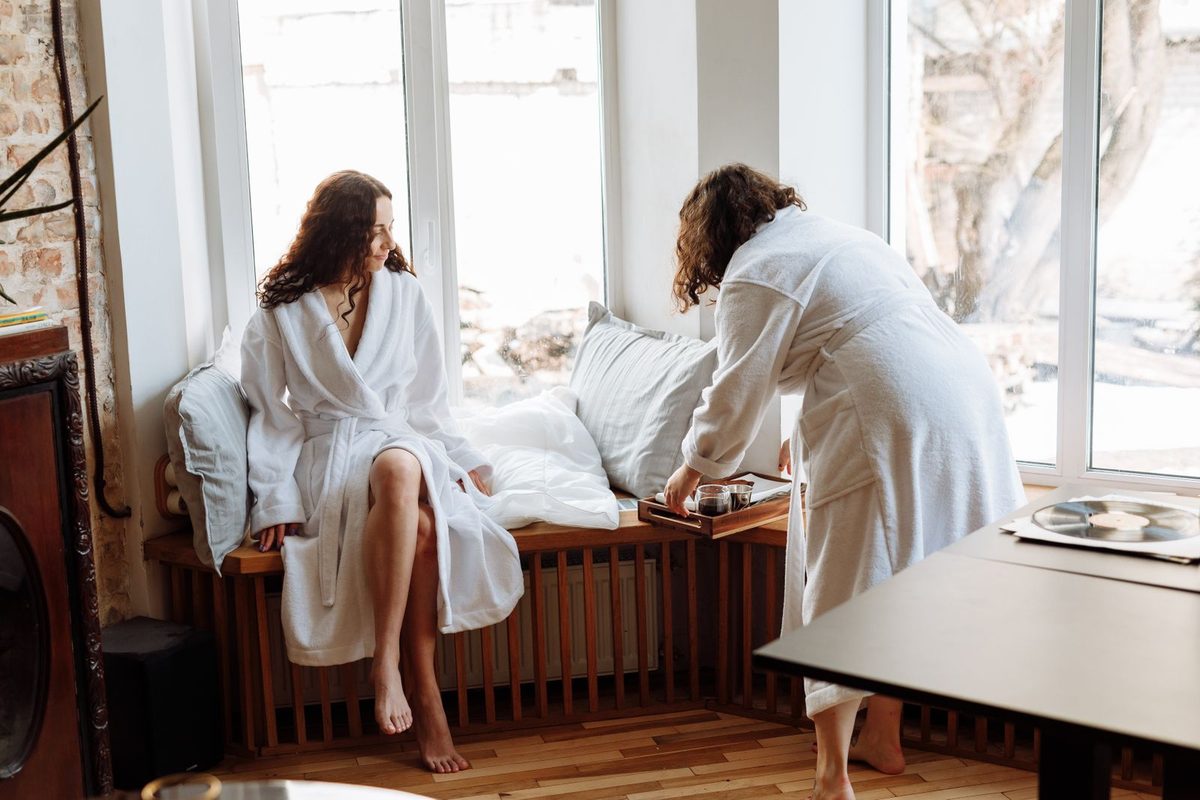
Lisbon · since 2019
we are Laras
Three workshops in the north of Portugal, one small laundry in Lisbon, 26 garments, and a rule that nothing is listed until it has been washed 200 times.
Three workshops in the north of Portugal, one small laundry in Lisbon, 26 garments, and a rule that nothing is listed until it has been washed 200 times.
Laras is named after our founder’s grandmother, who wore the same brushed-cotton pyjamas for the better part of two decades and could not understand why the ones her granddaughter bought in 2018 fell apart in a season. The seams went first, then the waistband, then the fabric itself went thin at the knee. Eleven washes.
So the idea was simple, if slow: find the mills and workshops that still make cloth to last, and prove it before selling it rather than promising it afterwards. The test laundry came before the first product did. The first four garments went on sale in 2019, after eight months of washing.
We still only sell what has survived the machine. About a third of what we try does not.
 200 × 40 °C
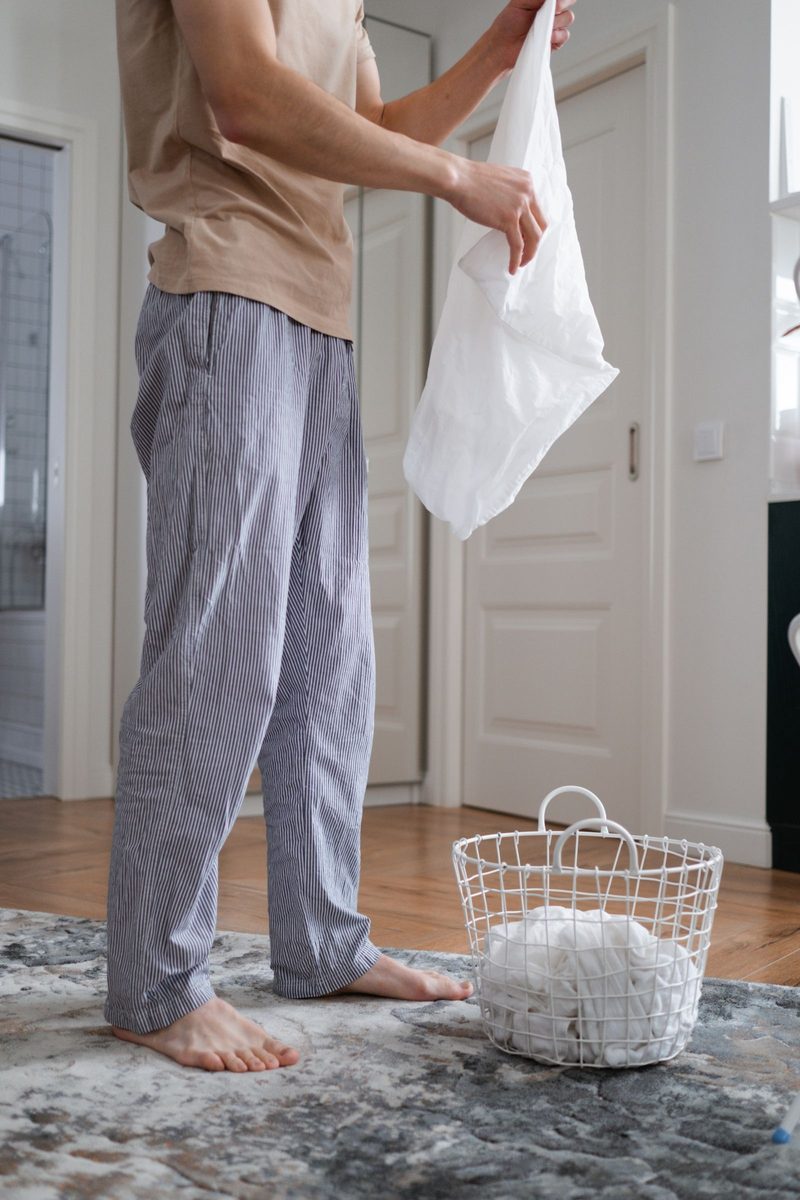
For every fabric we are considering, three finished garments go into two ordinary domestic machines in our Lisbon workspace and are washed at 40 °C with a supermarket detergent, 200 times. Half the cycles are tumble dried low, half are line dried, because that is roughly what happens in real houses.
We measure each garment flat before the first wash, after the fifth and after the last. The shrinkage figure on every product page is the fifth-wash number, because that is when almost all of it has happened. We photograph the surface at the same three points for pilling, pull on every seam, and note the wash on which anything gave way.
Mostly seams and elastic, not cloth. Overlocked seams that were not also topstitched open up between washes 60 and 120. Cheap covered elastic loses a third of its stretch by wash 80. Very light jersey goes sheer. A fabric that passes is one where, at wash 200, we would still put the garment on.
The guarantee covers half of what we tested for, because your machine, your detergent and your dryer are not ours. It is a figure we can stand behind for every garment sold, not just the ones washed the way we wash.
That anything is “anti-pilling” (brushed cotton pills, then stops), that a garment will last a lifetime, or that a fabric is soft without saying how heavy it is. If a sentence cannot be measured, it does not go on a product page.
All in the Minho, all within a morning’s drive of each other, all visited every few weeks.
The poplin, sateen, flannel, brushed cotton, waffle, terry and linen. A family weaving mill and the sewing workshop next door that makes our pyjamas and robes.
Loopback, French terry, fleece, jersey and rib, knitted and then cut and sewn under the same roof. Everything under Lounge and Layers.
A hosiery factory that has knitted socks since the 1960s, and a small knitwear atelier two streets away for the cardigan and the jumper.
Two washing machines, a tumble dryer, a washing line on a roof terrace, a set of scales and a tape measure. Also where your parcel is packed.
Tell us whether you want soft on the first night or soft in the third year. That one question decides most of the range, and we will answer it straight — including when the answer is the cheaper garment.
Write to us